
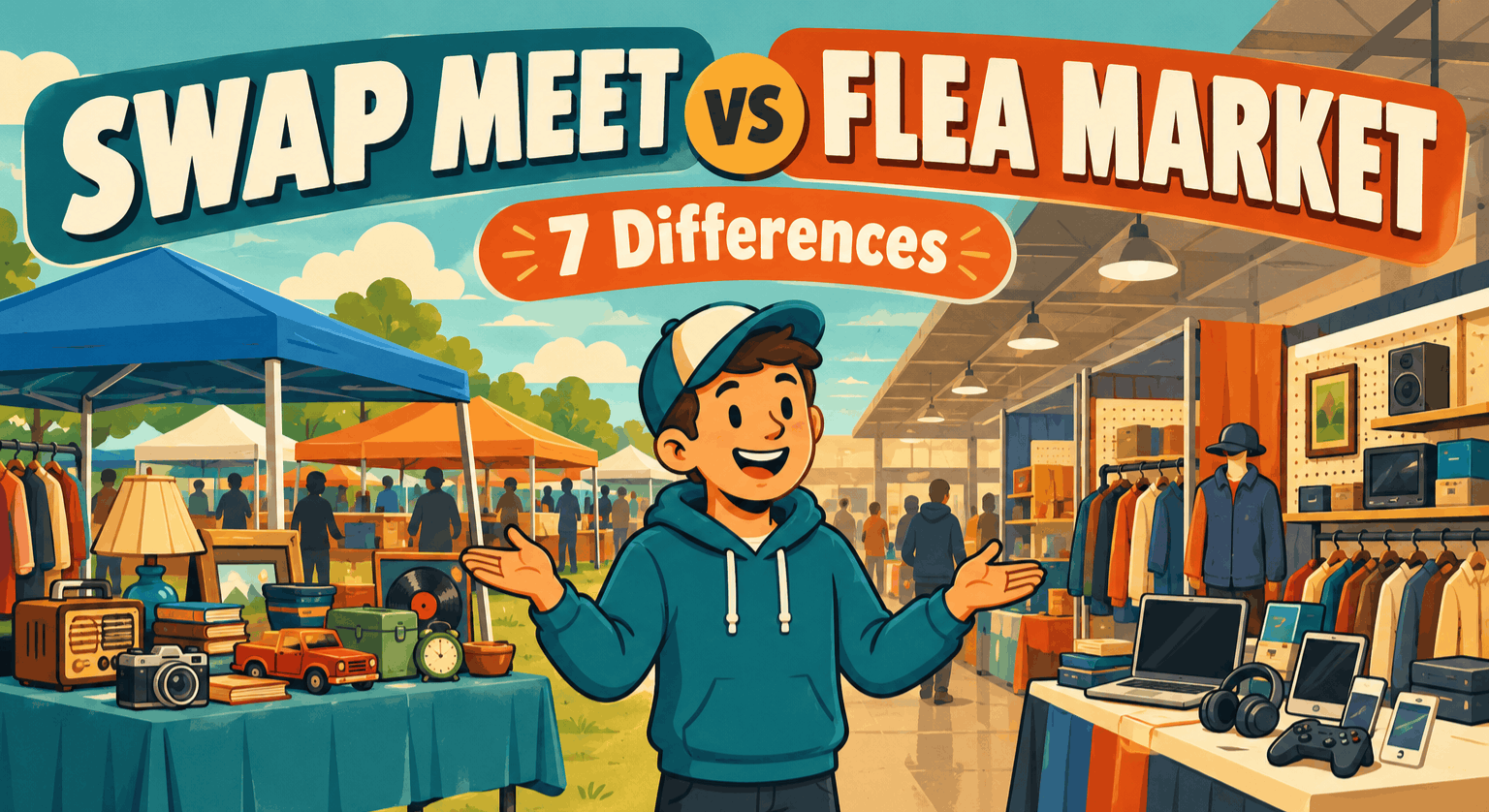
If you have ever wondered about swap meet vs flea market, you are not alone. People use the two names as if they mean the same thing, and in a lot of conversations they do. But the words carry different histories, different layouts, and in some parts of the country very different shopping experiences. Knowing the difference helps you decide where to spend your Saturday, what to bring, and what kind of deals to expect.
This guide walks through seven differences between a swap meet and a flea market, then covers a few shopping habits that work at both. It also explains where online shopping fits in, because the swap meet spirit of browsing tables of varied inventory and hunting for a bargain has moved onto the internet too.
Jump To
Swap Meet vs Flea Market: The Short Answer
In the United States, an outdoor swap meet is generally the same thing as a flea market. Both are gatherings where many independent sellers set up on certain days, usually in a parking lot, field, or fairground, and shoppers walk the rows looking for deals. The place where the two names really split is the indoor swap meet. According to the Wikipedia entry on indoor swap meets, an indoor swap meet is a permanent shopping center with fixed booths or storefronts that keeps regular retail hours. That setup is much closer to a bazaar than to a weekend field market.
So when someone says swap meet, they might mean an outdoor market that looks just like a flea market, or they might mean an indoor market that operates like a small mall full of independent vendors. The rest of this guide separates those two ideas and shows what else sets them apart.
1. The Names Have Different Roots
The term flea market is an English version of the French phrase marche aux puces, which literally means market with fleas. As the Wikipedia article on flea markets explains, the name is tied to 1860s Paris, and there are two competing stories for it. One says the fleas lived in the worn upholstery of old furniture being sold. The other says dealers pushed out by city redevelopment gathered near one of the city gates and the name followed.
Swap meet has a plainer meaning. It points to a gathering where people come to swap, trade, and sell goods, and that idea of neighbors trading with neighbors is still part of how people think about these markets today.
2. Outdoor Markets and Indoor Markets Work Differently
This is the biggest practical difference. An outdoor swap meet or flea market is a pop-up. Sellers arrive with tables, tarps, canopies, or the open tailgate of a truck, set up for the day, and pack up when it ends. Where a seller sits can change from one week to the next.
An indoor swap meet is a permanent building with fixed booths. Vendors rent their spaces and stay in the same spot, so a shopper who liked a booth last month knows exactly where to find it again. Indoor markets also tend to have restrooms, food courts, and shelter from the sun, which makes a long browse more comfortable.
3. Schedules: Weekends Versus Everyday
In the swap meet vs flea market comparison, schedules are one of the easiest differences to spot. Outdoor swap meets and flea markets usually run only on certain days. Many are weekend events, and some are monthly or seasonal, so you often need to check the calendar before you go. If you show up on the wrong day you may find an empty lot.
Indoor swap meets keep regular retail hours and are open on a steady schedule, much like any other shopping center. That makes them easier to fit into a weekday errand run, and it gives vendors a steady stream of customers instead of a single big weekend.
4. What You Will Find Is Different
Outdoor flea markets are known for secondhand goods, antiques, vintage clothing, records, tools, and collectibles. Part of the fun is that nobody knows what will turn up, and a single table can hold a lamp from the 1950s next to a box of old comic books.
Indoor swap meets lean the other way. The Wikipedia entry notes that indoor swap meets sell mostly new goods, with some sections carrying vintage or secondhand items. Typical categories include phone accessories, electronics, clothing, toys, home goods, jewelry, and household basics at low prices. Shoppers go for everyday value rather than rare finds, and many of the best-selling swap meet items come from these categories. If you want to see how that kind of inventory looks online, browse the Electronics category on e-SwapMeet for a small taste of it.
5. The Sellers Are Different
When you compare swap meet vs flea market sellers, the first thing you notice is who is behind the table. Flea markets often include a lot of part-time sellers. These are people clearing out a garage, selling crafts as a side hobby, or working a regular job and selling on the weekend. Their tables change from week to week depending on what they have found or made.
Indoor swap meets are more likely to be full-time businesses. Many vendors rent the same booth for years, restock regularly, and depend on the income. Sellers at both kinds of markets can be full-time or part-time, but the balance tends to tilt toward hobby sellers outdoors and career vendors indoors. That also changes how people shop, since a regular booth owner builds a repeat customer base and often knows their buyers by name.
6. The Words Change From Region to Region
Where you live decides which word you hear. The term indoor swap meet is used mostly in Southern California and Nevada, while many other parts of the country simply say flea market for both indoor and outdoor versions. Outside the United States the vocabulary changes again. In the United Kingdom, outdoor markets of this kind are often called car boot sales, and indoor charity events are called jumble sales. In Germany the word is Flohmarkt, and in Australia the phrase swap meet often refers to markets that focus on car and motorcycle parts.
The swap meet vs flea market choice of words matters when you search online. Someone looking for a bargain market in San Bernardino or Los Angeles will probably type swap meet, while someone in the Midwest or on the East Coast may type flea market. A guide or a store that uses both words reaches both groups.
7. Each Has Its Own History
The swap meet vs flea market story starts with two very different origins. Flea markets trace back to nineteenth century Paris, as covered above. Swap meets in the United States grew out of a different story. According to Wikipedia, they began as outdoor gatherings of local sellers dealing mostly in secondhand goods. When drive-in theaters began losing customers, some owners rented out their daytime lots to swap meets, which is why so many early markets were held in old drive-in parking areas.
In the 1970s, new immigrant communities added cultural goods and affordable services, and some markets began to resemble the open-air markets of Mexico. Later, immigrant entrepreneurs stocked stalls with low-priced new merchandise and, in the 1980s and 1990s, converted vacant properties in Los Angeles into the first indoor swap meets. Today the swap meet is part marketplace, part community hub, and part small business incubator for people who want to start selling without opening a traditional store, and it is still going strong, as we explain in why swap meets are still relevant, even online.
How to Shop a Swap Meet or a Flea Market
The swap meet vs flea market label does not change the basics, and whichever kind of market you visit, a few habits help. Go early for the best selection, since the good items go first, or go late if you want to bargain, since sellers may prefer to sell rather than pack up. Bring cash in small bills, because many sellers do not take cards and exact change speeds up a sale. Carry a tote bag, and wear comfortable shoes if the market is large.
Ask about the price politely and be willing to bundle. Buying three items from one seller is usually an easier conversation than asking for a discount on one. Test electronics before you pay when a seller allows it, and ask whether there is a return policy. And do not feel pressured, since there are always more tables to see.
Sellers can learn from the same habits. If you are curious about the other side of the table, read our guide on how to sell at a swap meet online.
Where Online Fits In
The biggest limit of any swap meet is time. An outdoor market is open on certain days, an indoor market is open during certain hours, and you can only be in one place at once. Online marketplaces take the best parts of the experience, which are variety, low prices, and independent sellers, and make them available at any hour. Our online swap meet marketplace guide explains how that works.
That is the idea behind e-SwapMeet. It is an online marketplace built for swap meet vendors, where each seller runs their own store and shoppers can browse deals from many sellers in one place. Vendors pay a flat $10 a month with 0% commission and no listing fees, and their products are submitted to Google Shopping automatically. If you sell at a swap meet or a flea market, the vendor page explains how to open an online booth, and the Inventory Cards guide shows how to list a whole table from a single photo.
Whichever side of the swap meet vs flea market question you land on, indoor or outdoor, the appeal is the same: a varied table, a fair price, and the chance to find something you did not know you needed. Now you can look for it from your phone as well as your parking lot.